
Regional Ecological Summit 2026 Opens in Astana with Call for Shared Action on Climate and Sustainable Development
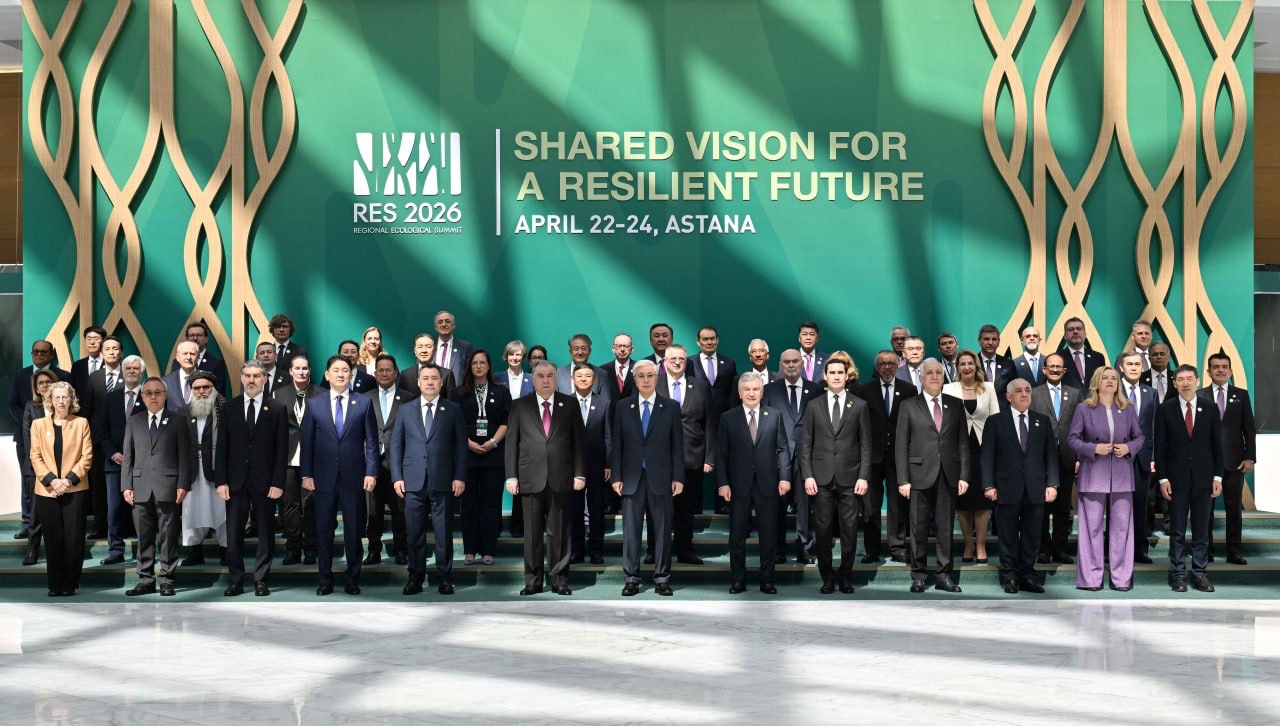
ASTANA, KAZAKHSTAN, April 23, 2026 /EINPresswire.com/ -- The Regional Ecological Summit (RES) 2026 opened yesterday in Astana, bringing together senior government leaders, international organisations, development institutions, the private sector, and experts from across the region to advance practical solutions to shared environmental and climate challenges. Held under the theme “A Shared Vision for a Sustainable Future,” the Summit is designed to strengthen regional cooperation, accelerate investment, and support coordinated action on sustainability, resilience, and low-carbon development.
In opening remarks, President Tokayev set out Kazakhstan's bold environmental ambitions and a clear strategy for the road ahead: “Environmental cooperation must serve as a reliable instrument of unity and should not divide us. It should be based on partnership, trust and shared responsibility – with no naming, no shaming, and no blaming. As partners we must work pragmatically and responsibly in support of peace and sustainable development.” His address framed RES 2026 as a forum for dialogue and practical partnerships capable of delivering measurable, lasting progress.
The opening day also featured statements from eight heads of state: H.E. Vahagn Khachaturyan, President of Armenia; H.E. Mikheil Kavelashvili, President of Georgia; H.E. Sadyr Japarov, President of the Kyrgyz Republic; H.E. Ukhnaagiin Khürelsükh, President of Mongolia; H.E. Emomali Rahman, President of Tajikistan; H.E. Serdar Berdimuhamedov, President of Turkmenistan; H.E. Shavkat Mirziyoyev, President of Uzbekistan; H.E. Ali Asadov, Prime Minister of Azerbaijan. Each leader underscored the urgent need for deeper cross-border and cross-sector coordination, reflecting a shared conviction that the environmental challenges facing Central Asia are inseparable from broader global questions of energy security, climate finance, food systems, and disaster preparedness.
Day 1 of the Summit placed particular emphasis on the themes that will shape the wider RES 2026 agenda: the green transition from ambition to action; building climate resilience; the resource equation of water, land, and food security; sustainable management of natural resources; mechanisms for achieving environmental ambitions; just and inclusive transition; and the role of technology, education, and digital solutions in shaping a sustainable future.
These priorities were reflected across the opening sessions, including “Scaling Up Circularity: Regional Cooperation to Close the Loop”, which convened policymakers, technical experts, and practitioners for in-depth discussion. Speakers highlighted the critical role of financing, technology transfer, and institutional cooperation in scaling circular economy solutions across the region. Inger Andersen captured the moment's significance, stating: “Regional cooperation can foster a market-driven transition. I really salute the framework for partnership in circular economy that this region is now developing. It is a golden opportunity for collaboration here in Central Asia.”
The Summit also drew attention to the wider global resonance of these challenges. From water stress and climate vulnerability to the need for early-warning systems and development finance, the pressures facing Central Asia mirror those experienced in regions around the world. RES 2026 was presented as a model for how regional platforms can generate common solutions adaptable across geographies, reinforcing the Summit's role as a convening force for shared learning and practical cooperation.
As the first day concluded, RES 2026 had already established a clear and compelling sense of purpose: to connect political leadership with technical expertise, to align ambition with implementation, and to build partnerships capable of enduring well beyond the event itself. Further sessions over the coming days will continue to build on this momentum, advancing a common agenda for a more resilient and sustainable future.
In opening remarks, President Tokayev set out Kazakhstan's bold environmental ambitions and a clear strategy for the road ahead: “Environmental cooperation must serve as a reliable instrument of unity and should not divide us. It should be based on partnership, trust and shared responsibility – with no naming, no shaming, and no blaming. As partners we must work pragmatically and responsibly in support of peace and sustainable development.” His address framed RES 2026 as a forum for dialogue and practical partnerships capable of delivering measurable, lasting progress.
The opening day also featured statements from eight heads of state: H.E. Vahagn Khachaturyan, President of Armenia; H.E. Mikheil Kavelashvili, President of Georgia; H.E. Sadyr Japarov, President of the Kyrgyz Republic; H.E. Ukhnaagiin Khürelsükh, President of Mongolia; H.E. Emomali Rahman, President of Tajikistan; H.E. Serdar Berdimuhamedov, President of Turkmenistan; H.E. Shavkat Mirziyoyev, President of Uzbekistan; H.E. Ali Asadov, Prime Minister of Azerbaijan. Each leader underscored the urgent need for deeper cross-border and cross-sector coordination, reflecting a shared conviction that the environmental challenges facing Central Asia are inseparable from broader global questions of energy security, climate finance, food systems, and disaster preparedness.
Day 1 of the Summit placed particular emphasis on the themes that will shape the wider RES 2026 agenda: the green transition from ambition to action; building climate resilience; the resource equation of water, land, and food security; sustainable management of natural resources; mechanisms for achieving environmental ambitions; just and inclusive transition; and the role of technology, education, and digital solutions in shaping a sustainable future.
These priorities were reflected across the opening sessions, including “Scaling Up Circularity: Regional Cooperation to Close the Loop”, which convened policymakers, technical experts, and practitioners for in-depth discussion. Speakers highlighted the critical role of financing, technology transfer, and institutional cooperation in scaling circular economy solutions across the region. Inger Andersen captured the moment's significance, stating: “Regional cooperation can foster a market-driven transition. I really salute the framework for partnership in circular economy that this region is now developing. It is a golden opportunity for collaboration here in Central Asia.”
The Summit also drew attention to the wider global resonance of these challenges. From water stress and climate vulnerability to the need for early-warning systems and development finance, the pressures facing Central Asia mirror those experienced in regions around the world. RES 2026 was presented as a model for how regional platforms can generate common solutions adaptable across geographies, reinforcing the Summit's role as a convening force for shared learning and practical cooperation.
As the first day concluded, RES 2026 had already established a clear and compelling sense of purpose: to connect political leadership with technical expertise, to align ambition with implementation, and to build partnerships capable of enduring well beyond the event itself. Further sessions over the coming days will continue to build on this momentum, advancing a common agenda for a more resilient and sustainable future.
Luke McNeil
Panterra Global
email us here
Legal Disclaimer:
EIN Presswire provides this news content "as is" without warranty of any kind. We do not accept any responsibility or liability for the accuracy, content, images, videos, licenses, completeness, legality, or reliability of the information contained in this article. If you have any complaints or copyright issues related to this article, kindly contact the author above.
